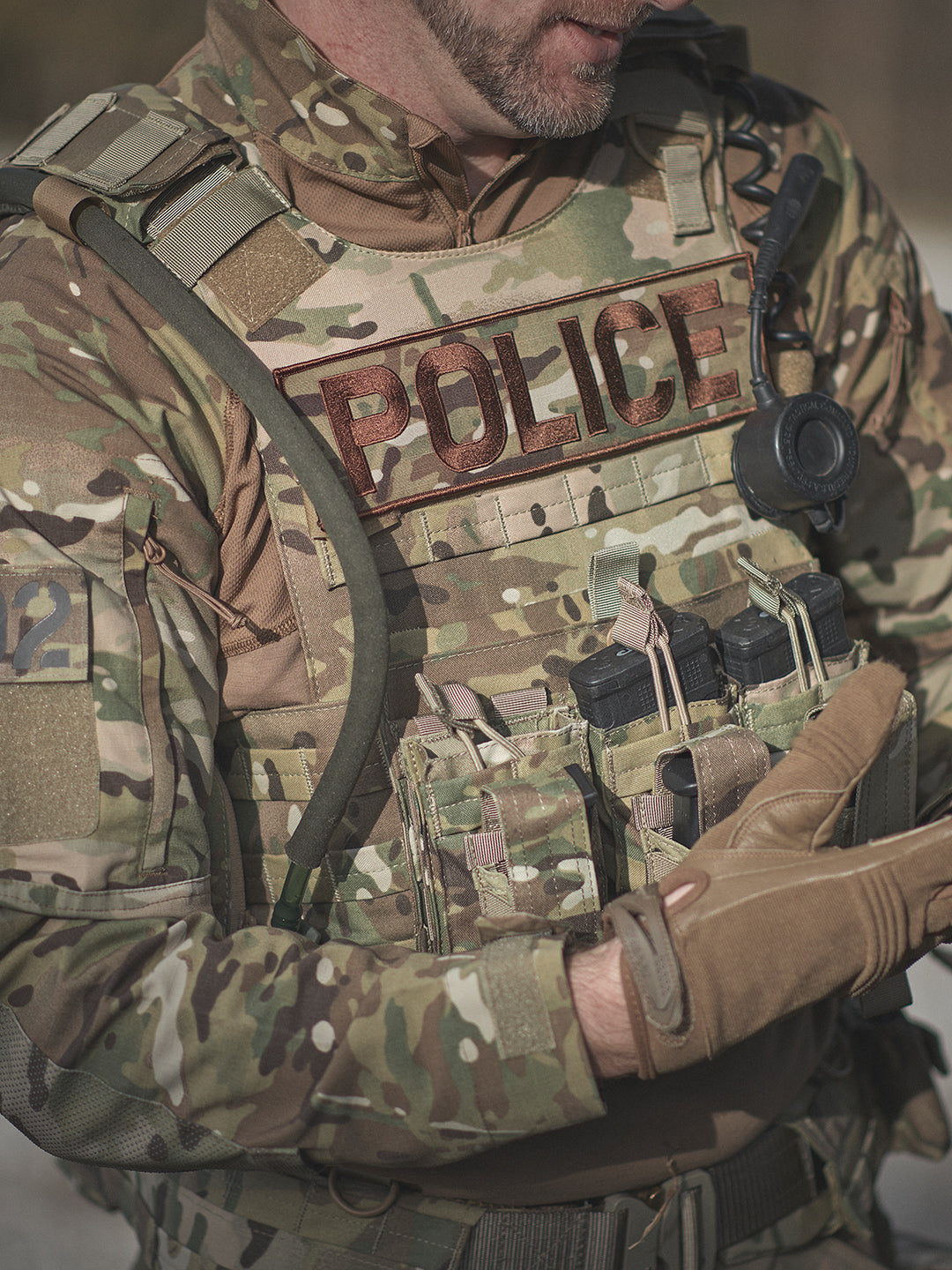
What is Molle?
What is Molle?
MOLLE stands for Modular Lightweight Load-carrying Equipment. It’s a standardized system used to attach pouches, holsters, and gear to backpacks, plate carriers, chest rigs, and belts.
MOLLE was developed for the U.S. military in the late 1990s to replace older load-bearing systems. Instead of sewing pouches permanently onto a vest or pack, MOLLE allows users to configure their setup based on mission, environment, or personal preference.
At its core, MOLLE is about modularity. You build your loadout the way you want it.
How to Weave MOLLE
This is the part many people get wrong.
Simply threading the straps straight down behind the webbing is not correct. That causes sagging and movement.
Here is the proper method:
Step 1: Align the Pouch
Line up the pouch straps with the PALS rows on your bag or vest.
Step 2: Thread Through the Platform
Push the strap through the first row of webbing on the platform.
Step 3: Weave Back Through the Pouch
Instead of going straight down, weave the strap back through the webbing on the pouch itself.
You should alternate:
- Platform webbing
- Pouch webbing
- Platform webbing
- Pouch webbing
This creates a tight interlock.
Step 4: Secure the End
Most straps use:
- Snap buttons
- Velcro
- Malice clips
- Tuck tabs
Lock it in firmly at the bottom.
When woven correctly, the pouch should feel rigid with almost no movement.
Common Mistakes
1. Running straps straight down without weaving
2. Mixing incompatible row spacing
3. Overloading small panels
4. Leaving bottom snaps unsecured
Improper weaving defeats the entire purpose of the system.
MOLLE vs. PALS in Simple Terms
If you want it broken down simply:
MOLLE = The modular gear system
PALS = The webbing grid that makes it work
Think of MOLLE as the concept and PALS as the hardware.
Where Did MOLLE Come From?
The system was adopted by the United States Army around 1997. It replaced the older ALICE system and introduced a more secure and adaptable method of attaching gear.
While MOLLE started in the military, it quickly moved into law enforcement, outdoor recreation, hunting, airsoft, and civilian tactical markets.
Today, you’ll see MOLLE webbing on everything from hiking packs to everyday carry bags.
What Is PALS?
This is where most people get confused.
MOLLE is the overall system.
PALS is the actual webbing grid.
PALS stands for Pouch Attachment Ladder System. It is the grid of horizontal nylon webbing sewn onto gear.
The webbing is typically:
- 1 inch wide
- Spaced 1 inch apart
- Stitched down every 1.5 inches to create columns
That grid creates channels where straps from pouches can be woven through.
Without PALS webbing, MOLLE attachments would not work.
So technically, when people say “MOLLE webbing,” they are usually referring to PALS.
Why MOLLE Became Popular
There are a few reasons the system became dominant:
Customization
You can place pouches exactly where you want them.
Security
When properly woven, pouches do not flop or bounce around.
Scalability
You can run a minimal setup or a fully loaded configuration.
Standardization
Most brands follow the same spacing standard, so components are compatible across manufacturers.
Final Thoughts
MOLLE changed how gear is carried. It gave users the ability to adapt their setup instead of being stuck with fixed pockets.
Whether you are setting up a plate carrier, organizing a range bag, or building out a hiking pack, understanding how PALS works and how to weave properly is what makes the system effective.
If you want, I can also add a short section on laser-cut MOLLE vs traditional webbing and which is stronger.